Friday, December 14, 2012

MY CATHEDRAL


Image: digitalblasphemy.com

This is the place for peace and reflection. This is the most perfect cathedral. This is it!! I'm going there ASAP. Divine shadow and light.

I WAS HUNG UP


Image: http://www.russandreyn.com/

I was hung up yesterday and didn't post. Did you miss me?


verbal phrase, c.1300; telephone sense by 1911. Noun hang-up "psychological fixation" is first attested 1959, from notion of being suspended in place.

http://www.etymonline.com/index.php?term=hang+up&allowed_in_frame=0

Wednesday, December 12, 2012

OUR OWN SHADOW

multiplayerblog.mtv.com

Here's a shadow quote I know the truth of from writer Chuck Palahniuk:

“Maybe the only thing each of us can see is our own shadow.

Carl Jung called this his shadow work. He said we never see others. Instead we see only aspects of ourselves that fall over them. Shadows. Projections. Our associations.

The same way old painters would sit in a tiny dark room and trace the image of what stood outside a tiny window, in the bright sunlight.

The camera obscura.

Not the exact image, but everything reversed or upside down.”

― Chuck Palahniuk, http://chuckpalahniuk.net/
 

Tuesday, December 11, 2012

MOONSHADOW


Image: http://rory-mac.com/new-lyrics/

I wonder if this image was photoshopped. I don't care. I like the image.

When I ran across this image, I thought of songs. First I thought of all those Tin Pan Alley songs about Moon, June and Spoonin' such as By the Light of the Silvery Moon, Blue Moon, How High the Moon, Moonlight Becomes You, No Moon at All, etc.

Then the 1970s song Moonshadows recorded by Cat Stevens came to mind.  This happended despite the fact that I don't like the song very much. I do remember it seemed to be on the radio constantly back in the 1970s.  The melody was unappealing to me. Stevens does tell a nice story though about how he came up with the song. When he appeared on The Chris Isaak Hour in 2009, Stevens said of this song: "I was on a holiday in Spain. I was a kid from the West End (of London) - bright lights, etc. - I never got to see the moon on its own in the dark, there were always streetlamps. So there I was on the edge of the ocean on the beach on a beautiful night with the moon glowing, and suddenly I looked down and saw my shadow. I thought that was so cool, I'd never seen it before."

Stevens, now known as Yusuf Islam, considers Moonshadows his favorite of his old songs. Stevens  practices Sufism, a branch of Islam. It's one of the songs that he feels has an uplifting message that can help people. I looked up the lyrics, because I didn't know them. One thing I would say for sure is don't play this on the overhead speakers in a dentist's office! 

MOONSHADOWS, Cat Stevens, 1971

Yes
I'm bein' followed by a moon shadow
Moon shadow
Moon shadow.
Leapin' and hoppin' on a moon shadow
Moon shadow
Moon shadow.
And if I ever lose my hands
Lose my power
Lose my land -
Oh
If I ever lose my hands
Ooh
I won't have to work no more.
And if I ever lose my eyes
If my colours all run dry
Yes
If I ever lose my eyes
Ooh
I won't have to cry no more.
Yes
I'm bein' followed by a moon shadow
Moon shadow
Moon shadow.
Leapin' and hoppin' on a moon shadow
Moon shadow
Moon shadow.
And if I ever lose my legs
I won't moan and I won't beg
Oh
If I ever lose my legs
Ooh
I won't have to walk no more.
And if I ever lose my mouth
All my teeth North and South

Yes
If I ever lose my mouth
Ooh
I won't have to talk.
Did it take long to find me? I asked the faithful light.
Did it take long to find me and are you gonna stay the night?
I'm bein' followed by a moon shadow
Moon shadow
Moon shadow.
Leapin' und hoppin' on a moon shadow
Moon shadow
Moon shadow.

This song is much beloved by many people around the world and there are some like me who don't particularly care for the song. For an insight into the responses people have had to this song visit:
http://www.songfacts.com/detail.php?id=288


Monday, December 10, 2012

SHADOWY U.S. AND UK COMPANIES BUILT ON DIRTY MONEY


MYSTERY SHOPPER,

http://creativecommons.org/licenses/by-nc-sa/2.0/


The fight against dirty money goes on. I ran across this shadow image on : http://www.financialtaskforce.org/2012/10/01/mystery-shopping-exercise-shows-how-easy-it-is-to-set-up-anonymous-companies-in-the-u-s-and-uk/ It is the site for the Task Force for Financial Integrity and Economic Development.

Check out the link and look for the article written by Rosie Sharp. Here is part of what she wrote: 

You’re a criminal and you’ve got loads of cash. You really want that mansion in London. But how are you going to get it? You need a company service provider to set up an anonymous shell company to disguise who’s behind the money and a bank willing to do business with your shell.
But how simple is this process given international law, and in virtually every country,national law too, insists companies should not be anonymous?

A new study out last week shows it is disturbingly easy for criminals to hide their identity behind companies. Academics Michael Findlay, Daniel Nielson and Jason Sharman proved this in their revealing study which tested the effectiveness of this key area of law in the fight against dirty money.

Posing as consultants, they asked more than 3,700 company service providers in 182 countries to each set up a shell company for them. Then they recorded how many of them abided by the law by recording who owned and controlled that company. The results make happy reading for the world’s corrupt politicians, mafia bosses, tax evaders and criminals. The academics’ shopping exercise found that 48% of company service providers who replied to the survey were prepared to set up an anonymous shell company in that they did not require the researchers to provide an authenticated copy of their passport.

And, contrary to expectations, the company service providers in the places that you’d imagine might help out the wannabe kleptocrat – the small, sunny Caribbean island tax havens – were far more law-abiding than company service providers in rich, OECD* countries. Not a single example could be found of a service provider in the Cayman Islands willing to set up an anonymous company. Yet it was really quite easy to find a service provider in the UK who would flout the law for you. Of all OECD nations, American company service providers were the worst offenders. In fact, only Kenyan service providers exceeded their U.S. counterparts in their willingness to establish anonymous companies,

Criminals can rest easy. It’s really not that difficult to get yourself an anonymous company – and one registered in a pretty legit-sounding place too.

* OECD Countries link: http://www.oecd.org/general/listofoecdmembercountries-ratificationoftheconventionontheoecd.htm

Sunday, December 9, 2012

A BENCH AT THE BEACH AT DAYBREAK


Photo Link:
<a href="http://www.publicdomainpictures.net/view-image.php?image=22426&picture=at-daybreak">At Daybreak</a> by Bobby Mikul
To me this image conveys the unique solitude of meditation. It's not the quality of the shadow that holds my attention, it's the quiet peaceful "oneness" of the shadowed bench with the silent sands attending the composure of the brilliant blue sea.

Saturday, December 8, 2012

SHADOW FILMS


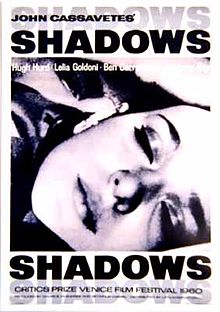
I searched for movies with the word "Shadow" in the title. There are several. "Shadows" was made by director/actor, John Cassavetes. He made it in 1957, a time when the struggle for Civil Rights was becoming prominent in American society. Shadows is considered a very early example of independent film-making.

The film has a jazz soundtrack. In the 1950s Dave Brubeck, the well-known jazz pianist, who died a few days ago, was one of the so-called Jazz Ambassadors touring for the State Department. Also booked to tour as Jazz Ambassadors were legendary African American jazz musicians like Louis Armstrong.

The State Department honchos believed that creating and funding tours which included black jazz musicians would show the world the great equality-driven democracy the U.S. epitomized in the 1950s. The tours were intended to counter the racist, Jim Crow profile that the rest of the world saw in American society at the time.

In 1958, Louis Armstrong refused to tour for the State Department and publicly decried President Eisenhower's lack of support for school integration in the south. Such was the social climate of the 1950s when this film was made.

Here is what Wikipedia posted about the film:

SHADOWS is an improvised film about interracial relations during the Beat Generation years in New York City, and was written and directed by John Cassavetes. The film's stars are Ben Carruthurs, Lelia Goldoni, Hugh Hurd, and Anthony Ray (Tony in the film). Many film scholars consider Shadows one of the historical highlights of independent film festival developments in the U.S. In 1960 the film won the Critics Award at the Venice Film Festival.

Cassavetes shot the film twice, once in 1957 and again in 1959. The second version is the one Cassavetes favored. Although he did screen the first version, he lost track of the print, and for decades it was believed to have been lost or destroyed. The 1957 version was intended to have the jazz music of bassist, Charles Mingus on the soundtrack, but Mingus failed to meet various deadlines set by Cassavetes. The contributions of saxophonist Shafti Hadi, the saxophonist for Mingus's group, proved to ultimately be the soundtrack for the film.
In 2004, after over a decade of searching, Cassavetes scholar and Boston University professor Ray Carney announced his discovery of the only print of the original version of the film, found in a box on the subway before being bought with some other "lost and found" objects. See an article below from Slate which casts a shadow on Ray Carney's dealings with the work of other filmmakers in addition to Cassavetes.  The film Carney managed to find was a pristine copy that apparently had only been screened two or three times before it was lost. Carney has posted three video clips from Shadows I for viewing on his website to verify the film's condition and indicate the presence of a complete credits sequence, which demonstrates that the version he possesses is a final version, not a rough assembly.

Film critic Leonard Maltin calls Cassavetes' second version of Shadows "a watershed in the birth of American independent cinema". The movie was shot with a 16 mm handheld camera on the streets of New York. Much of the dialogue was improvised, and the crew were class members or volunteers. The jazz-infused score underlines the movie's Beat Generation theme of alienation and raw emotion. The movie's plot features an interracial relationship, which was still a taboo subject in Eisenhower-era America.


In 1993, Shadows was selected for preservation in the United States National Film Registry by the Library of Congress as being "culturally, historically, or aesthetically significant".


For Ray Carney's description of his hunt for the missing Shadows first copy click on this link:


The Rate My Professors page for Boston University’s Ray Carney seems particularly divided, even for that contentious forum. It contains superlatives that range from “the most intelligent, thoughtful, and motivating figure I’ve ever encountered in my life” to "Worst Professor."

However, Carney’s student critics are the least of his worries right now. The film scholar has provoked the outrage of movie critics and enthusiasts by confiscating endangered works and production materials from beloved independent filmmaker Mark Rappaport. Rappaport, director of The Scenic Route (“a movie of great, grave, tightly controlled visual daring,” according to Roger Ebert) and From the Journals of Jean Seaberg (a “new kind of movie, and a highly entertaining one,” says Jonathan Rosenbaum) among many other works, issued a plea to the international film community in September to rescue his films from the scholar’s possession. According to his letter, Rappaport entrusted digital copies, video masters, and script drafts, among other materials, to Carney—who has in the past called Rappaport “the best-kept secret in American film” and “a genuine national treasure”—when he moved from the U.S. to France in 2005. However, when Rappaport contacted Carney this past April to return his property, Carney did not respond to his emails—or, later, to a court’s preliminary injunction. When the court entered a default against the scholar for Carney’s failure to respond to the charges, Carney hired a lawyer who claimed Rappaport gave him the rare materials as a gift. After a four month-long court battle, Carney contacted the director, saying he would return the materials if Rappaport gave him $27,000 for the trouble of keeping the materials for seven-and-half years. Rappaport did not continue the suit, citing its expense.
In the letter, Rappaport pleads, “Without the digital video masters, my films, everything prior to 1990 … cannot be made available for streaming, commercial DVDs, video-on-demand, or any electronic delivery system down the road. My life as a filmmaker, my past, and even my future reputation as a filmmaker are at stake.”
Carney, a powerful and influential scholar who has been deemed “a cinematic Ralph Nader,” has gotten into a fight over film possession before: He feuded with John Cassavetes’ widow Gena Rowland over his discovery of a first cut of Shadows (the result of a 17-year quest), which he claims is an improvised work and therefore does not belong to her company, Faces Distribution Incorporated. Reporting on that conflict, GreenCine Daily referred to Carney’s “eerie insistence on speaking on behalf of Cassavetes himself.”
Carney has long maintained an extensive website devoted to his work, and his past comments there are not helping him now. When Carney was emailed by someone looking for Rappaport’s contact information so that he could put together a screening of some of Rappaport’s old films, he published the exchange on his webpage. “Mark is a great friend and gave me almost everything he owned when he left New York for France,” Carney explained, “Thousands of pages and box after box of material. So I am now the ‘Mark Rappaport Archive.’” He then said that he is “not a rental operation” and so his “massive collection is of no use at all for your purposes.” “Sorry I can’t help or be more encouraging,” he added. As Roger Ebert tweeted this past September, “Yeah, sure, indie director Mark Rappaport ‘gave’ his life work to Prof. Ray Carney.” Ebert has called the whole Carney/Rappaport business a “disturbing story.”
Former supporters of Carney have since turned against the scholar in Rappaport’s defense, including Jon Jost of cinemaelectronica, who recently published a petition for Carney to return Rappaport’s “stolen film materials.” Jost, a self-avowed friend of Carney’s, writes that many attempts to contact his former email correspondent have gone unanswered, confirming his suspicions that Carney’s intentions are less than trustworthy.
Meanwhile, Carney has not responded to the increasing noise level on Internet forums to defend himself over the Rappaport works and is reportedly spending time in Vermont. He can’t be missing in action forever, though. He should be back at Boston University’s College of Communication in Spring 2013, to teach “American Independent Film.”